
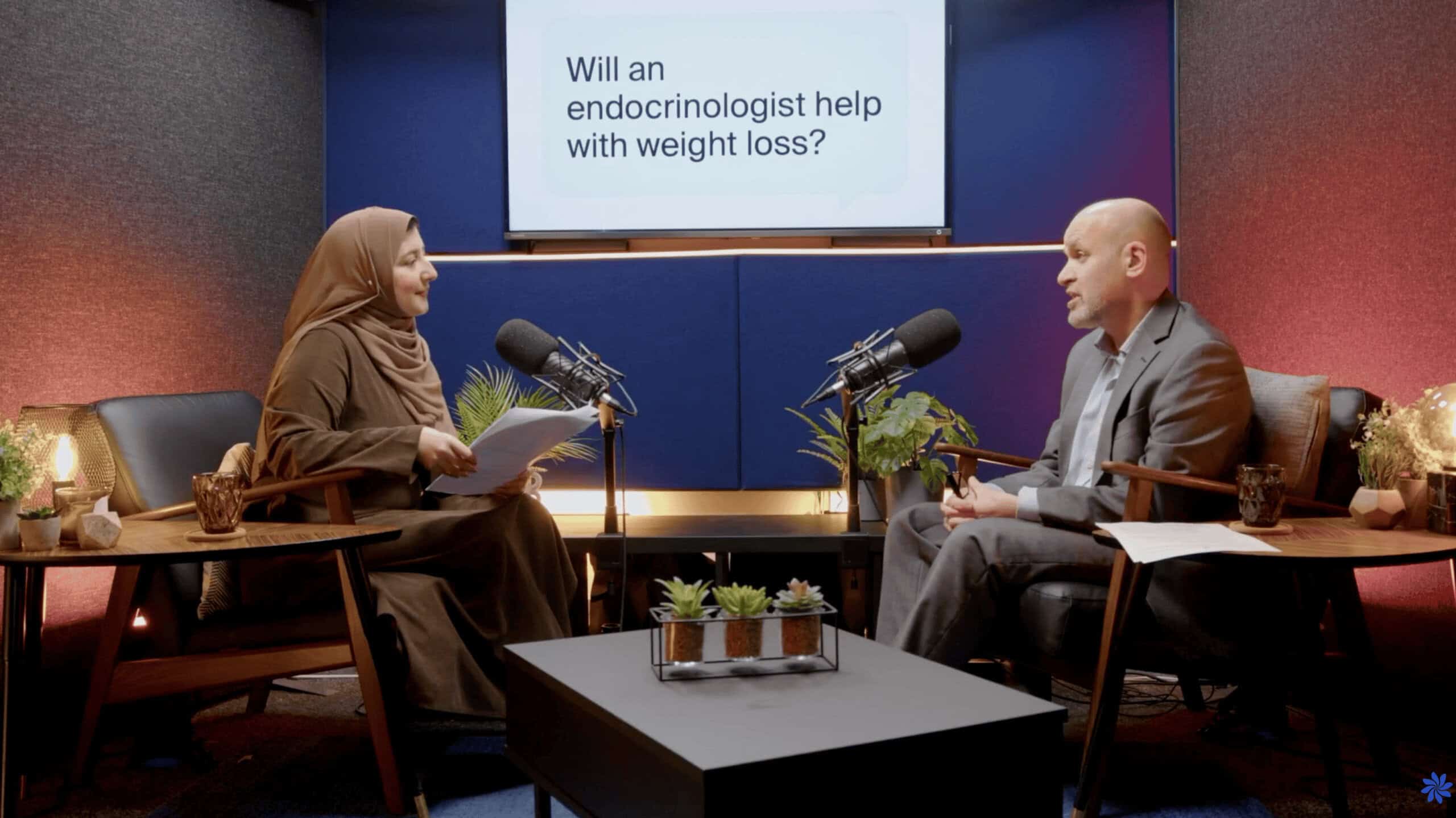
I was pleased to take part in the “Ask the Expert” podcast series hosted by Simple Online Pharmacy, an organisation that supports people living with obesity through evidence-based treatment and patient education.
The discussion, led by Aamina Rafiq, covered the science behind GLP-1 therapies and the hormonal regulation of appetite. The key takeaway was clear: weight regulation is driven by complex biological systems. It is not simply a matter of personal discipline.
Understanding the hormonal control of appetite
A significant part of the conversation focused on how appetite is regulated.
Hunger and fullness are controlled by a network of hormones. Ghrelin is often referred to as the primary “hunger hormone”, stimulating appetite. Leptin plays an important role in signalling satiety.
GLP-1 is a hormone naturally released from the small intestine when nutrients enter the gut. It acts on centres in the brain that regulate appetite and interacts with hormones such as ghrelin and leptin to promote fullness.
This interaction helps explain why GLP-1 therapies can reduce appetite so effectively — they are enhancing a system that already exists within the body.
Can diet support natural GLP-1 activity?
We also discussed how certain foods may help stimulate the body’s own GLP-1 production.
Protein-rich foods, fibre-dense options such as oats and lentils, healthy fats including avocado and olive oil, and fermented foods have all been associated with promoting satiety and supporting gut hormone responses.
While nutrition alone may not replace medical treatment where it is clinically appropriate, focusing on these food groups could help maintain fullness, particularly when transitioning off GLP-1 therapy.
Stress, cortisol and food choices
Stress is another biological factor that influences eating behaviour.
Elevated cortisol levels, which occur during periods of stress, can drive preferences for calorie-dense, highly palatable “comfort foods.” These foods are often lower in nutritional value and less effective at promoting satiety.
Over time, stress-related eating patterns can contribute to weight gain and make sustained weight management more difficult.
Addressing stress as part of a broader lifestyle strategy remains an important part of long-term care.
Is obesity a chronic medical condition?
We also examined whether obesity should be treated as a long-term condition.
Many individuals begin GLP-1 therapy with the expectation that once weight is lost, it will remain off permanently. However, evidence shows that weight regain is common after stopping treatment, and in some cases can occur relatively quickly.
This is why sustained lifestyle change is essential — not only for maintaining weight loss, but also for protecting muscle mass and overall health.
For some individuals, longer-term medical therapy may be required. For others, consistent dietary and exercise habits may be sufficient. What is increasingly clear is that obesity behaves like other chronic conditions and requires ongoing attention.
Final reflections
The Simple Online Pharmacy team have provided an excellent summary of the discussion on their website. It was a privilege to contribute to a conversation that continues to shift understanding towards the biological drivers of obesity.
As research in endocrinology and metabolic health advances, improving education and reducing stigma around weight management remains critically important.
Simple Online Pharmacy supports patients living with obesity through evidence-led treatment and education. The full interview can be viewed at the Simple Online Pharmacy website – Ask the Expert: Endocrinology – It’s Not Willpower, It’s Biology
 Visit our Irish site